
Offer details
Prezzi commerciali
| Distributore | Prodotto | SKU | Stock | Aggiornato | Prezzo |
|---|---|---|---|---|---|

|
HP 2810-48G SWITCH |
J9022A |
Prodotti collegati
- Moduli del ricetrasmettitore di rete
- Porta accessori
- Convertitori multimediali di rete
- Servizio di installazione
- Servizi di supporto IT
- Componenti switch
-
 Categoria: Moduli del ricetrasmettitore di rete
 -
 Categoria: Moduli del ricetrasmettitore di rete
 -
 Categoria: Moduli del ricetrasmettitore di rete
 -
 Categoria: Moduli del ricetrasmettitore di rete
 -
 Categoria: Moduli del ricetrasmettitore di rete
 -
 Categoria: Moduli del ricetrasmettitore di rete
 -
 Categoria: Moduli del ricetrasmettitore di rete
-
 Categoria: Porta accessori
 -
 Categoria: Porta accessori
 -
 Categoria: Porta accessori
 -
 Categoria: Porta accessori
 -
 Categoria: Porta accessori
 -
Categoria: Porta accessori
-
Categoria: Porta accessori
-
 Categoria: Porta accessori
-
 Categoria: Convertitori multimediali di rete
-
 Categoria: Servizio di installazione
 -
Categoria: Servizio di installazione
-
Categoria: Servizi di supporto IT
-
Categoria: Servizi di supporto IT
-
Categoria: Servizi di supporto IT
-
Categoria: Servizi di supporto IT
-
 Categoria: Servizi di supporto IT
 -
Categoria: Servizi di supporto IT
-
Categoria: Servizi di supporto IT
-
Categoria: Servizi di supporto IT
-
Categoria: Servizi di supporto IT
-
Categoria: Servizi di supporto IT
-
Categoria: Servizi di supporto IT

Descrizione
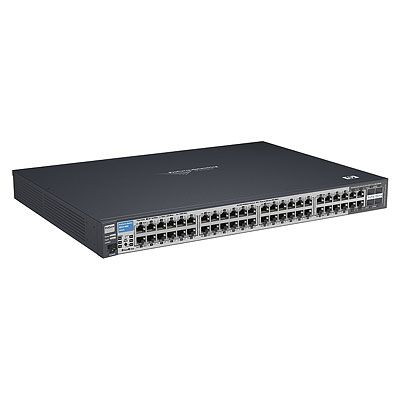
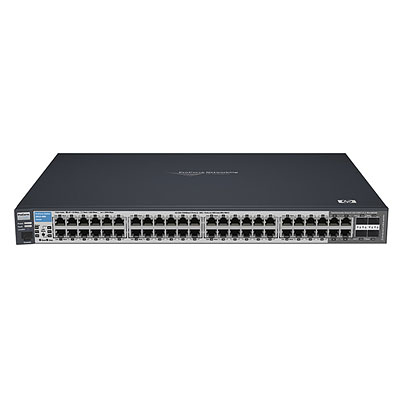
La serie di switch HP 2810 è costituita da due switch: lo Switch HP 2810-24G a 24 porte con 20 porte 10/100/1000 e lo Switch HP 2810-48G a 48 porte con 44 porte 10/100/1000. Inoltre, ogni switch è dotato di quattro porte dual-personality per connettività RJ-45 10/100/1000 o Gigabit in fibra ottica mini-GBIC. Ideale per connettività 10/100/1000 sicura e ad elevate prestazioni, lo switch serie 2810 offre sicurezza di accesso e prioritizzazione avanzata oltre a funzionalità di monitoraggio del traffico. La serie è economica e facile da usare, con un formato 1U poco profondo che assicura flessibilità operativa per l'utilizzo con armadi di distribuzione più piccoli.
Qualità di servizio (QoS)
• Class of Service (CoS): impostazione di tag di priorità IEEE 802.1p basati su indirizzo IP, Type of Service (ToS) IP, protocollo L3, numero di porta TCP/UDP, porta sorgente e DiffServ
Connettività
• Funzionalità dual-personality: quattro porte 10/100/1000 o slot SFP per connettività opzionale Gigabit in fibra ottica quale Gigabit-SX, -LX, -LH o 100-FX
Flessibilità e disponibilità elevata
• Protocollo IEEE 802.3ad LACP (Link Aggregation Control Protocol) e HP port trunking: supportano fino a 24 trunk, ciascuno con max 8 collegamenti (porte) per trunk
Gestibilità
• sFlow (RFC 3176): accounting e monitoraggio del traffico wire-speed
Switching layer 2
• Supporto e tagging VLAN: supporto simultaneo di IEEE 802.1Q (4.094 ID VLAN) e 256 VLAN
Sicurezza
• Sicurezza delle porte: l'accesso è consentito solo agli indirizzi MAC specificati dall'amministratore
Convergenza
• Snooping multicast IP e IGMP basato su dati: prevenzione automatica del flooding di traffico multicast IP
Qualità di servizio (QoS)
• Class of Service (CoS): impostazione di tag di priorità IEEE 802.1p basati su indirizzo IP, Type of Service (ToS) IP, protocollo L3, numero di porta TCP/UDP, porta sorgente e DiffServ
Connettività
• Funzionalità dual-personality: quattro porte 10/100/1000 o slot SFP per connettività opzionale Gigabit in fibra ottica quale Gigabit-SX, -LX, -LH o 100-FX
Flessibilità e disponibilità elevata
• Protocollo IEEE 802.3ad LACP (Link Aggregation Control Protocol) e HP port trunking: supportano fino a 24 trunk, ciascuno con max 8 collegamenti (porte) per trunk
Gestibilità
• sFlow (RFC 3176): accounting e monitoraggio del traffico wire-speed
Switching layer 2
• Supporto e tagging VLAN: supporto simultaneo di IEEE 802.1Q (4.094 ID VLAN) e 256 VLAN
Sicurezza
• Sicurezza delle porte: l'accesso è consentito solo agli indirizzi MAC specificati dall'amministratore
Convergenza
• Snooping multicast IP e IGMP basato su dati: prevenzione automatica del flooding di traffico multicast IP
Specifiche
| Caratteristiche di gestione | |
|---|---|
| Tipo interruttore | Gestito |
| Connettività | |
| Quantità di porte RJ-45 | 48 |
| Trasmissione dati | |
| Dimensioni tavola MAC | 8000 voci |
| Throughput | up to 71.4 million pps |
| Massima velocità di trasferimento | 1 Gbit/s |
| Sicurezza | |
| Filtri MAC address | Sì |
| Protocolli | |
| Protocollo di commutazione | Ethernet |
| Protocolli supportati | Network Management Device Management MIBs General Protocols IEEE 802.1X Port Based Network Access Control; RFC 1492 TACACS+; RFC 2138 RADIUS Authentication; RFC 2866 RADIUS Accounting; Secure Sockets Layer (SSL); SSHv2 Secure Shell IEEE 802.1AB Link Layer Discovery Protocol (LLDP); RFC 2819 Four groups of RMON: 1 (statistics), 2 (history), 3 (alarm) and 9 (events); RFC 3176 sFlow; SNMPv1/v2c/v3 IEEE 802.1D MAC Bridges; IEEE 802.1p Priority; IEEE 802.1Q VLANs; IEEE 802.1s Multiple Spanning Trees; IEEE 802.1w Rapid Reconfiguration of Spanning Tree; IEEE 802.3ad Link Aggregation Control Protocol (LACP); IEEE 802.3x Flow Control; RFC 768 UDP; RFC 783 TFTP Protocol (revision 2); RFC 792 ICMP; RFC 793 TCP; RFC 826 ARP; RFC 854 TELNET; RFC 951 BOOTP; RFC 1542 BOOTP Extensions; RFC 2030 Simple Network Time Protocol (SNTP) v4 RFC 1213 MIB II; RFC 1493 Bridge MIB; RFC 1573 SNMP MIB II; RFC 2021 RMONv2 MIB; RFC 2096 IP Forwarding Table MIB; RFC 2613 SMON MIB; RFC 2618 RADIUS Client MIB; RFC 2620 RADIUS Accounting MIB; R |
| Protocolli di rete supportati | RFC 783 TFTP; RFC 951 BootP; RFC 1542 BootP; RFC 854 Telnet; RFC 768 UDP; RFC 792 ICMP; RFC 793 TCP; RFC 826 ARP; RFC 2030 Simple Network Time Protocol; IEEE 802.3x Flow Control; RFC 3376 IGMPv1/v2/v3; IEEE 802.1D Spanning Tree; IEEE 802.1w Rapid Convergence Spanning Tree; IEEE 802.1s Multiple Spanning Trees; IEEE 802.3ad Link Aggregation Control Protocol; IEEE 802.1AB Link Layer Discovery Protocol; RFC 1492 TACACS+; RFC 2138 RADIUS; RFC 2866 RADIUS accounting; SSHv2 Secure Shell; Secure Sockets Layer (SSL); IEEE 802.1X Network Login; IEEE 802.1Q VLANs; IEEE 802.1Q GVRP; IEEE 802.1p Priority; SNMPv1/v2c/v3; HTML and telnet management; RFC 1493 Bridge MIB; RFC 1213 MIB II; RFC 2096 IP Forwarding Table MIB; RFC 2737 Entity MIB; RFC 2863 Evolution of Interface; RFC 2665 Ethernet MIB; RFC 2819 Four groups of RMON: 1 (statistics), 2 (history), 3 (alarm) and 9 (events); RFC 2021 RMON probe configuration (RMON v2); RFC 2668 802.3 MAU MIB; RFC 2613 SMON; RFC 2674 802.1p and IEEE 802.1Q Bridge MIB; RFC 2618 RADIUS Client MIB; RFC 2620 RADIUS Accounting MIB; RFC 3176 sFlow |
| Design | |
| Sicurezza | cUL (CSA 22.2 No. 60950); EN 60950/IEC 60950; NOM-019-SCFI-1994; UL 60950 |
| Compatibilità elettromagnetica | FCC Class A; VCCI Class A; EN 55022/CISPR 22 Class A; IEC/EN 61000-3-2; IEC/EN 61000-3-3 |
| Prestazione | |
| Frequenza del processore | 264 MHz |
| Tipo memoria | SDRAM |
| RAM installata | 64 MB |
| Memoria flash | 16 MB |
| Processore integrato | Sì |
| Modello del processore | Broadcom BCM5836 |
| Gestione energetica | |
| Consumi | 92 W |
| Voltaggio di ingresso | 100-127 / 200-240 VAC |
| Corrente d'ingresso | 1.5 A |
| Power over Ethernet (PoE) | |
| Supporto Power over Ethernet (PoE) | Sì |
| Altre caratteristiche | |
| Piattaforma di gestione | HP PCM+; HP PCM; command-line interface; Web browser; configuration menu; out-of-band management |
| Latenza | Latency: < 5.4 µs (FIFO 64-byte packets) |
| Dimensioni (LxPxA) | 322,6 x 442 x 43,2 mm |
| Tecnologia di connessione | Cablato |
| Velocità di rotazione hard disk | 7200 Giri/min |
| Particolarità networking | Ethernet, Fast Ethernet, Gigabit Ethernet |
| Montaggio | Mounts in an EIA-standard 19 in. telco rack or equipment cabinet (hardware included); horizontal surface mounting only |
| Memoria e processore | Processor: MIPS @ 264 MHz, 16 MB flash, packet buffer size: 1.5 MB, 64 MB SDRAM |
| Frequenza di ingresso | 50 / 60 Hz |
| Amministrazione remota | command-line interface; Web browser; configuration menu; out-of-band management |
| Alimentazione | 100-127 VAC/200-240 VAC; 50/60 Hz |
| Codice UNSPSC | 43222612 |
| Umidità relativa di non-funzionamento(senza condensazione) | 15 - 95% |
| Porte I/O | 44 auto-sensing 10/100/1000 ports(IEEE 802.3 Type 10Base-T, IEEE 802.3u Type 100Base-TX, IEEE 802.3ab Type 1000Base-T), Media Type: Auto-MDIX, Duplex: 10Base-T/100Base-TX: half or full; 1000Base-T: full only; 4 dual-personality ports, each port can be used as either an RJ-45 10/100/1000 port or an open mini-GBIC slot (for use with mini-GBIC transceivers) |
| Peso (imperiale) | 8.6 lb. |
| Organizzare nome prodotto | ProCurve Manager Plus; ProCurve Manager |
| Immunità elettromagnetica | EN 55024, CISPR 24; IEC 61000-4-2; IEC 61000-4-3; IEC 61000-4-4; IEC 61000-4-5; IEC 61000-4-6; IEC 61000-4-8; IEC 61000-4-11; EN 61000-3-2, IEC 61000-3-2; EN 61000-3-3, IEC 61000-3-3 |
| Emissioni elettromagnetiche | FCC Class A; EN55022/CISPR-22 Class A; VCCI Class A; IEC/EN61000-3-2; IEC/EN61000-3-3 |
| Altitudine di funzionamento (imperiale) | up to 10000 ft. |
| Voltaggio di ingresso | 100-127 / 200-240 VAC |
| Protocolli supportati | Network Management Device Management MIBs General Protocols IEEE 802.1X Port Based Network Access Control; RFC 1492 TACACS+; RFC 2138 RADIUS Authentication; RFC 2866 RADIUS Accounting; Secure Sockets Layer (SSL); SSHv2 Secure Shell IEEE 802.1AB Link Layer Discovery Protocol (LLDP); RFC 2819 Four groups of RMON: 1 (statistics), 2 (history), 3 (alarm) and 9 (events); RFC 3176 sFlow; SNMPv1/v2c/v3 IEEE 802.1D MAC Bridges; IEEE 802.1p Priority; IEEE 802.1Q VLANs; IEEE 802.1s Multiple Spanning Trees; IEEE 802.1w Rapid Reconfiguration of Spanning Tree; IEEE 802.3ad Link Aggregation Control Protocol (LACP); IEEE 802.3x Flow Control; RFC 768 UDP; RFC 783 TFTP Protocol (revision 2); RFC 792 ICMP; RFC 793 TCP; RFC 826 ARP; RFC 854 TELNET; RFC 951 BOOTP; RFC 1542 BOOTP Extensions; RFC 2030 Simple Network Time Protocol (SNTP) v4 RFC 1213 MIB II; RFC 1493 Bridge MIB; RFC 1573 SNMP MIB II; RFC 2021 RMONv2 MIB; RFC 2096 IP Forwarding Table MIB; RFC 2613 SMON MIB; RFC 2618 RADIUS Client MIB; RFC 2620 RADIUS Accounting MIB; R |
| Condizioni ambientali | |
| Intervallo temperatura di funzionamento | 0 - 45 °C |
| Intervallo di temperatura | -40 - 70 °C |
| Dimensioni e peso | |
| Peso | 3,9 kg |